Article: Why Your Brows Grow Unevenly — And What the Hair Growth Cycle Is Really Telling You
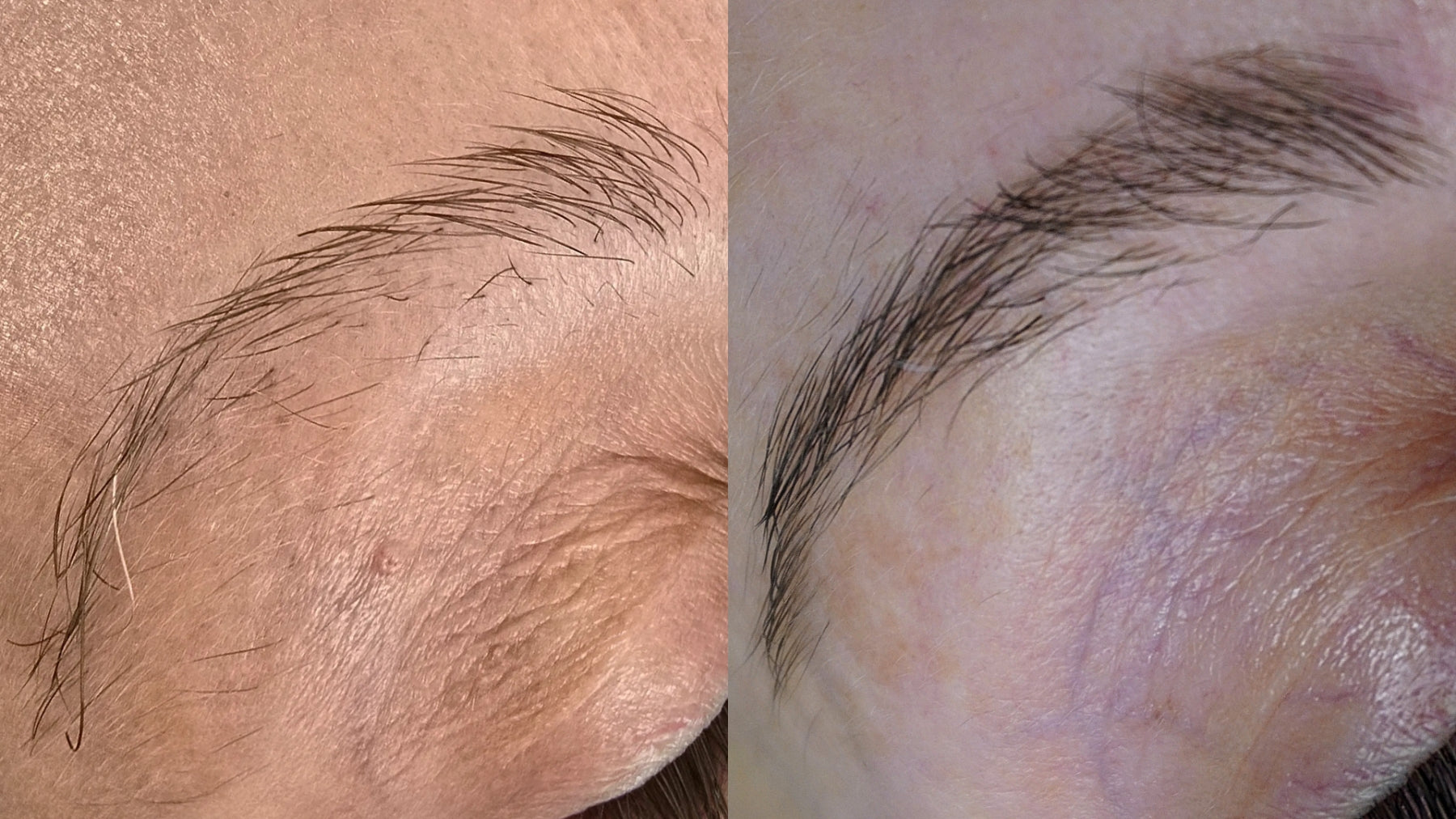
Why Your Brows Grow Unevenly — And What the Hair Growth Cycle Is Really Telling You
Every year, more Australian women notice one brow fuller than the other, or hairs shedding while others refuse to budge. If this sounds familiar, you haven't done anything wrong. What you're witnessing is the hair growth cycle doing exactly what it's designed to do. And once you understand it, your brows start to make a lot more sense.
Have you ever noticed one brow filling in beautifully while the other seems to lag behind?
Or wondered why certain hairs shed while others refuse to move?
This isn’t random.
It’s biology.
Your eyebrows are governed by a finely tuned growth cycle — one that quietly dictates when hairs grow, pause, and release. Understanding this cycle is the first step to understanding why brows change over time — and why they sometimes stop responding altogether.
The Brow Growth Cycle Explained
Just like scalp hair, eyebrow hair moves through a three-phase growth cycle.
The difference? Brow hair cycles are shorter, more sensitive, and far less forgiving.
Each hair operates on its own timeline — which is why brows often appear uneven, sparse, or unpredictable.
The Active Growth Phase
This is the phase everyone wants more of.
During the anagen phase, the follicle is actively producing new hair. Cells divide, hair lengthens, and growth is visible. For brows, this phase is naturally brief — often lasting only a few weeks.
At any given time, only a portion of your brow hairs are actively growing. The rest are waiting, transitioning, or resting. This is why brow growth can feel slow even when nothing is technically “wrong.”
The Transition Phase
Next comes a short but important pause.
In the catagen phase, the follicle begins to detach from its blood supply. Growth slows, then stops. The hair remains in place — but it’s no longer developing.
This phase is quiet, temporary, and easy to miss — yet it plays a critical role in regulating healthy turnover.
The Resting & Shedding Phase
Finally, the follicle enters the telogen phase.
Here, the hair rests. Eventually, it sheds — making space for a new cycle to begin. This process is gradual and natural. Shedding is not failure; it’s renewal.
But when follicles spend too long resting, or struggle to re-enter growth, brows begin to thin.
Why Brows Can Feel Unreliable
Because each hair is in a different phase at any moment, brows rarely grow evenly. Add in modern stressors — hormones, skin trauma, over-plucking, inflammation, ageing — and the cycle can become disrupted.
When communication between cells weakens, follicles don’t die — they pause.
This is why brows can feel stubborn, dormant, or “stuck,” even years after the original trigger.
Growth Isn’t About Forcing — It’s About Supporting
Healthy brow growth isn’t about stimulation alone.
It’s about supporting follicles at the right moment in their cycle — especially during the active growth phase.
When follicles are encouraged to:
-
stay in growth longer
-
strengthen before shedding
-
reduce time spent resting
density begins to return naturally, progressively, and intelligently.
This Is Where Brow Regeneration Begins
Understanding the brow growth cycle changes everything.
It shifts the conversation from “Why aren’t my brows growing?”
to “What do my follicles need to grow again?”
And that’s exactly where The Growth Phase™ begins — by working with your biology, not against it.
Ready to Understand Your Brows Properly?
If your brows feel inconsistent, sparse, or no longer responsive, the answer isn’t more pressure — it’s better support.
✨ Book your Brow Analysis
✨ Begin the 12-Week Growth Phase™ Journey
Because when follicles feel supported, growth follows.

Leave a comment
This site is protected by hCaptcha and the hCaptcha Privacy Policy and Terms of Service apply.