
Article: Thinning Eyebrows During Menopause — What's Really Happening and How to Fix It
Thinning Eyebrows During Menopause — What's Really Happening and How to Fix It
Thinning Eyebrows During Menopause — Understanding the Change, and Supporting Your Brows Through It
You've noticed it. The tails are disappearing. The fronts are patchy. Brows that were once full and defined are becoming sparse, unpredictable, and frustrating to work with.
If you're in perimenopause or post-menopause, this isn't in your head, and it isn't your fault.
Thinning eyebrows during menopause is one of the most common yet least talked-about changes women experience. This article explains what's understood about why it happens, and how a cosmetic, biology-first approach to brow appearance can support you through it.
Understanding Why Brow Density Can Change at This Life Stage
Hormonal change during perimenopause and post-menopause is well understoof to affect hair across the body , brows included. As oestrogen levels shift, women commonly report their hair, including brow hair, becoming finer, patchier, or slower to regrow, and skin can feel different too, often drier or less plump than before.
This is a normal, well-documented part of this life stage, not a personal failing or a sign that your follicles are "gone." Many women simply aren't told to expect it.
Why Basic Brow Serums Often Don't Feel Like Enough
Most brow serums on the market are single-ingredient, surface-conditioning formulas. They can make existing brow hair look and feel better, but they don't speak to the follicle environment itself, the skin conditions immediately around each hair.
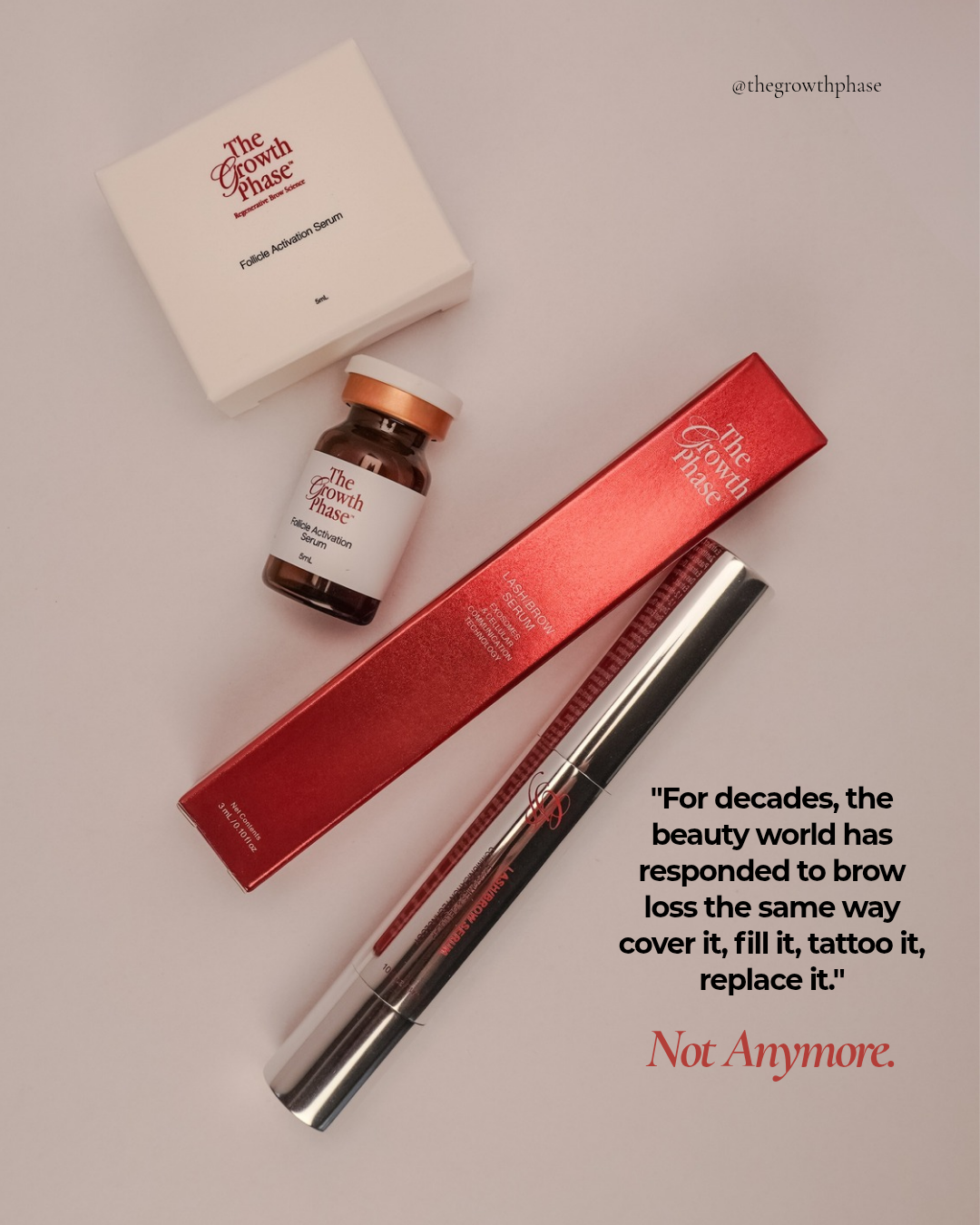
The Growth Phase™ was formulated differently. Whether it's the Lash & Brow Serum, the Home Kit, or the in-clinic Program, every option works from the same multi-pathway system and technology — designed to support the visible health of the brow area from several angles at once, rather than relying on a single ingredient or a single product.
How The Growth Phase™ Supports Brow Appearance
Every part of The Growth Phase™ is built on a multi-pathway approach to brow support. Rather than relying on a single ingredient or a single step, the system works across several angles at once to support the visible condition of the brow area, including:
DHT-supportive botanicals - Saw Palmetto, Green Tea, and Licorice Root are included as part of the formula's broader ingredient profile, commonly found in cosmetic hair-care products marketed toward fuller-looking hair.
Hydration and conditioning actives - Sodium Hyaluronate and Panthenol support the skin's surface hydration, Niacinamide supports the skin's barrier, and a complex of amino acids supports the overall condition and appearance of the hair around the brow follicle.
Biomimetic vesicle delivery (exosome technology) - a delivery system modelled on the body's own cell-to-cell communication structures, helping the formula's ingredients reach the follicle environment more effectively, supporting a healthier-looking brow area over time.
Circulation-supportive botanicals - Ginger and Zanthoxylum help support the appearance of a fresher, more nourished brow area by supporting circulation to the skin's surface.
Peptide complex - Tripeptide-1, Acetyl Tetrapeptide, Nonapeptide-1, and Hexapeptide-2 support follicle signalling and the structural condition of the hair as part of the brow's daily care routine.
What to Expect
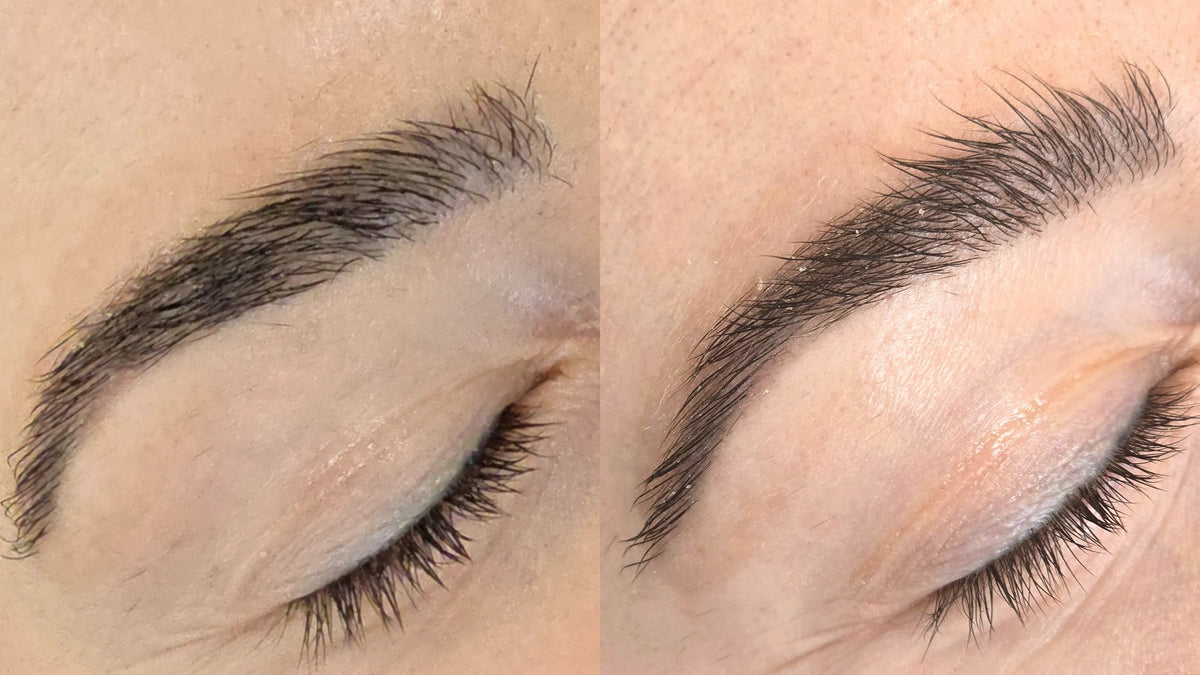
Supporting your brows is a gradual process, and individual results vary. Many clients report their brow hair looking and feeling fuller with consistent daily use. Within our 12–16 week Program specifically, 97% of our first program clients experienced measurable brow improvement, this figure is scoped to Program clients and reflects the full system, not the Serum used on its own.
This is about giving your brows consistent, multi-pathway support, not a single ingredient doing all the work, but a system built for the follicle environment as a whole.
You Haven't Lost Your Brows. They May Just Be Compromised.
Brow thinning at this life stage is common, and it's not something you need to accept as permanent or try to hide. A supportive routine, consistent care, and a system that works across multiple pathways can make a real difference in how your brows look and feel over time.
Not sure which option fits where you're at?
The Lash & Brow Serum is designed for everyday use in the earlier stages of visible thinning. For more established thinning, the 12–16 Week in clinic Program or for a self lead option our at-home Home Kit takes a deeper, follicle-first approach, wherever you're located.
Book a Brow Analysis at our Williamstown Clinic
The Growth Phase™ is Australia's first brow regeneration program, based in Williamstown, Victoria. We take a biology-first approach to brow follicle support and cosmetic tattooing for women at every life stage.

Leave a comment
This site is protected by hCaptcha and the hCaptcha Privacy Policy and Terms of Service apply.